StethoMe can be a useful tool for optimising your practice's workflow. Let's talk about coordinated asthma care.
Take a step into the future with us. Discover how StethoMe is transforming care for patients with respiratory infections or chronic respiratory conditions.
StethoMe enables patients to collect auscultatory data at home.
StethoMe auscultatory data:
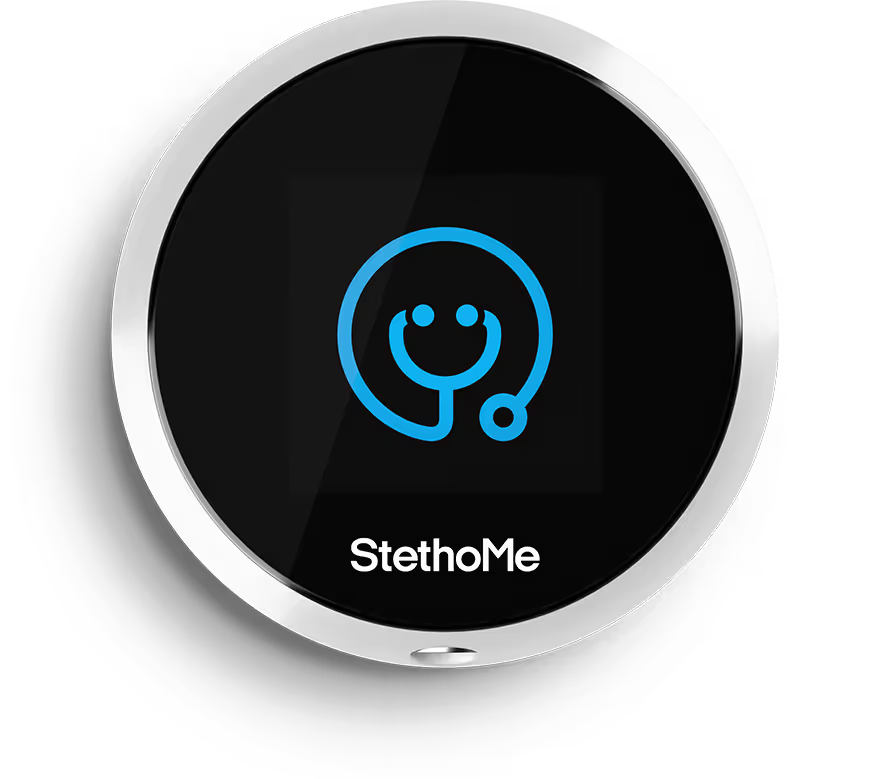
StethoMe supports both doctors and patients in following an individual asthma treatment plan. Home examinations performed by the patient:


StethoMe was developed on the basis of the latest scientific knowledge and years of research conducted at renowned medical institutions and within pilot programmes. The result is a substantial body of scientific publications in peer-reviewed journals LIST.
The latest observational study by StethoMe conducted as part of the project Improving the StethoMe system through the implementation of a personalised respiratory index (PRI) for monitoring respiratory function and a patient decision and selection support subsystem (POIR.01.01.01-00-0648/20-00) objęło aż:
The study demonstrated that StethoMe is an effective tool for documenting asthma exacerbation episodes and can be successfully used in monitoring patients with chronic conditions, replacing some traditional in-office visits. Over 97% of physicians rated StethoMe as useful or very useful for home care of patients with chronic respiratory conditions, particularly in children.*
* Results of a survey conducted among physicians testing the solution as part of the project.
The StethoMe Medical Advisory Board is an advisory body for StethoMe in the field of remote medical care and telemedicine using StethoMe solutions. It also supports the project's development in terms of research evidence and relations with the medical community.
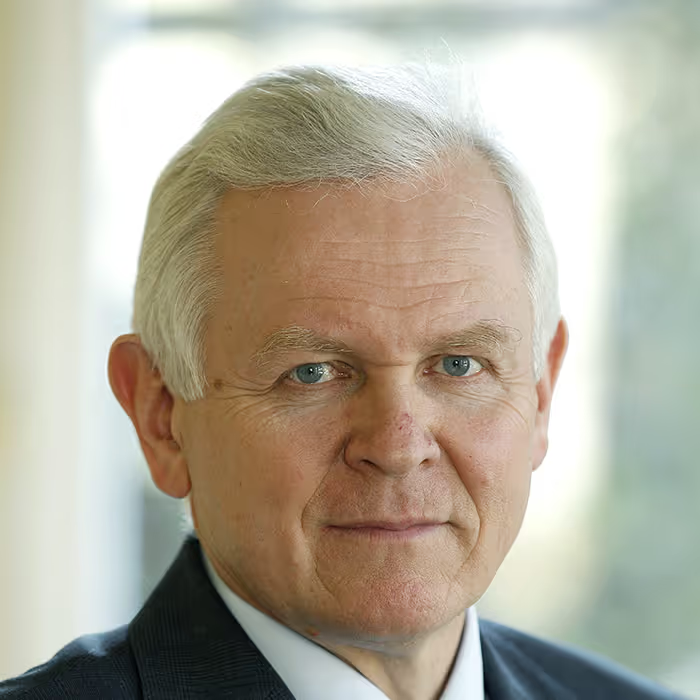
Paediatrician, pulmonologist and allergologist; Head of the Department of Paediatric Pulmonology and Rheumatology, 2nd Chair of Paediatrics, Medical University of Lublin; Head of the Polish Aerosol Therapy School; President of the Lublin Branch Board of the Polish Allergological Society; Chairman of the Paediatric Section of the Polish Allergological Society; member of the European Academy of Allergy and Clinical Immunology. His research interests include in particular: inhalation therapy, diagnosis and treatment of respiratory diseases and allergic conditions. He is the author of over 600 publications.
StethoMe features an auscultatory sound analysis system based on certified medical artificial intelligence algorithms.
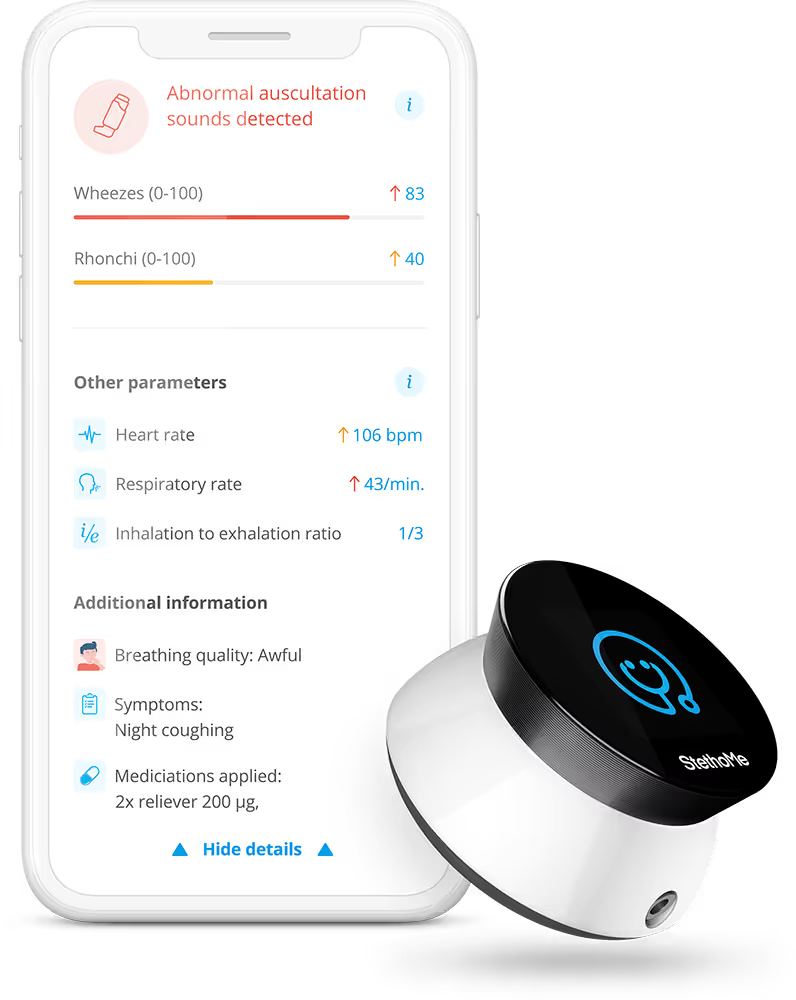
The algorithms detect, classify and determine the intensity of abnormal auscultatory sounds (on a scale from 0 to 100), including:
They also measure:


StethoMe supports two types of auscultatory examination - a single-point examination (asthma control) or a full lung examination.
This mode is designed for preventive screening. When selected, the patient performs a single-point examination.
The purpose of the examination is to provide a simple way to detect the early signs of an asthma exacerbation — the presence of wheezes and rhonchi, and changes in physiological parameters such as respiratory rate, inspiration-to-expiration time ratio, and heart rate.
During a full lung examination, depending on the patient's age, the examination is performed at 6–8 points. This mode detects all additional auscultatory sounds: wheezes, rhonchi, fine crackles, coarse crackles. Physiological parameters including respiratory rate, inspiration-to-expiration time ratio, and heart rate are also measured.
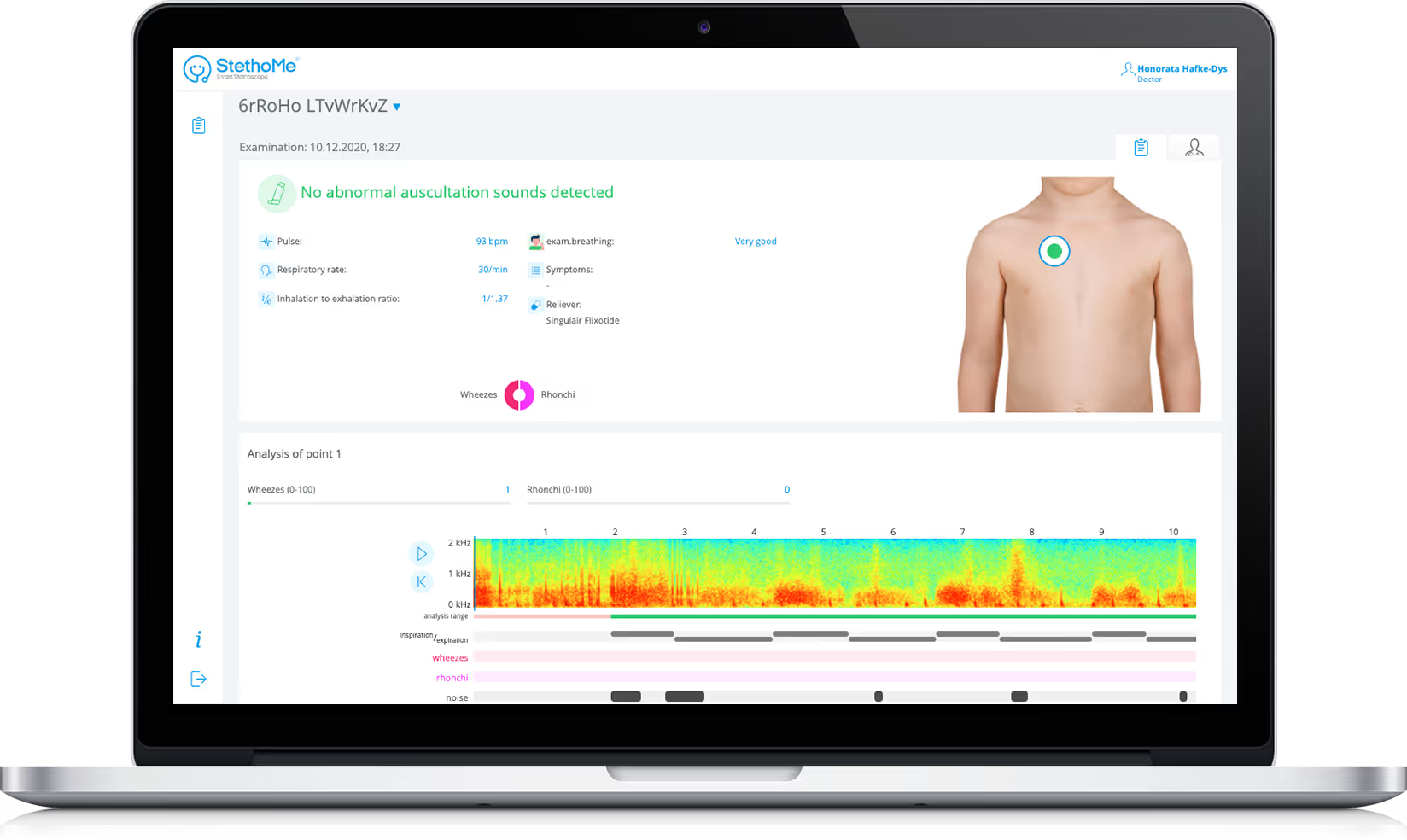
Results obtained using StethoMe are presented graphically in the form of a spectrogram — an easy-to-interpret visualisation of the recorded auscultatory sounds.

Barreto M, Tripodi S, Fracasso M, Cerocchi M, Mazzuca M, Evangelisti M, Pagani J, Guglielmi F, Parisi P.
https://doi.org/10.46889/JPAR.2026.5204Hafke-Dys H, Kuźnar-Kamińska B, Grzywalski T, Maciaszek A, Szarzyński K, Kociński J.
https://www.frontiersin.org/articles/10.3389/fphys.2021.745635/fullHonorata Hafke-Dys, Anna Bręborowicz, Paweł Kleka, Jędrzej Kociński, Adam Biniakowski
https://journals.plos.org/plosone/article?id=10.1371/journal.pone.0220606Tomasz Grzywalski, Mateusz Piecuch, Marcin Szajek, Anna Bręborowicz, Honorata Hafke-Dys, Jędrzej Kociński, Anna Pastusiak, Riccardo Belluzzo
https://link.springer.com/article/10.1007/s00431-019-03363-2Tomasz Grzywalski, Adam Maciaszek, Krzysztof Szarzyński, Honorata Hafke-Dys, Jędrzej Kociński, Barbara Kuźniar-Kamińska
https://erj.ersjournals.com/content/58/suppl_65/OA1291Tomasz Grzywalski, Marcin Szajek, Honorata Hafke-Dys, Anna Bręborowicz, Jędrzej Kociński, Anna Pastusiak, Riccardo Belluzzo
https://erj.ersjournals.com/content/54/suppl_63/PA2231.article-infoAjay C Kevat, Robert Roseby, Anaath Kalirajah, Tomasz Grzywalski, Honorata Hafke-Dys
https://onlinelibrary.wiley.com/doi/epdf/10.1111/resp.13777Ajay C Kevat, Anaath Kalirajah, Robert Roseby
https://respiratory-research.biomedcentral.com/articles/10.1186/s12931-020-01523-9Ajay C Kevat, Anaath Kalirajah, Robert Roseby
https://erj.ersjournals.com/content/56/suppl_64/4798Menard J., Bui S., Galodé F., Gallet P., Fayon M.
https://onlinelibrary.wiley.com/doi/full/10.1002/ppul.25963Tomasz Grzywalski, Riccardo Belluzzo, Mateusz Piecuch, Marcin Szajek, Anna Bręborowicz, Anna Pastusiak, Honorata Hafke-Dys, Jędrzej Kociński
https://link.springer.com/chapter/10.1007/978-3-030-21642-9_5Tomasz Grzywalski, Riccardo Belluzzo, Szymon Drgas, Agnieszka Cwalińska, Honorata Hafke-Dys
https://arxiv.org/abs/1907.11238Tomasz Grzywalski., Adam Maciaszek, Adam Biniakowski, JanOrwat, Szymon Drgas, Mateusz Piecuch, Riccardo Belluzzo, Krzysztof Joachimiak, Dawid Niemiec, Jakub Ptaszyński, Krzysztof Szarzyński
https://arxiv.org/pdf/1812.05888.pdfTomasz Grzywalski, Adam Maciaszek, Riccardo Belluzzo, Krzysztof Szarzyński, Mateusz Piecuch, Honorata Hafke-Dys
https://ieeexplore.ieee.org/document/9207315/